A Reason to Revisit Your Leftover Yarn
Most crocheters have a collection of leftover yarn that falls somewhere between “too useful to throw away” and “not enough for the project I had in mind.”
Atty introduces these chickens as a way to use leftover yarn. She also notes that the design can be made with different kinds of yarn and a matching hook. You can find her guidance and the full tutorial on the original pattern page.
Before buying anything new, take a look through what you already have. A small project can be a good opportunity to reconsider a color that has been sitting untouched for a while.
That mustard yellow left over from an autumn project might look lovely beside cream. A blue you never found a use for could become the starting point for a more unusual chicken. Even a combination you wouldn’t choose for a sweater might be just right for something this playful.
The original post doesn’t give a single yardage requirement in its materials section, so check the tutorial and your available yarn before deciding whether a particular leftover amount will be enough.
Choosing Colors That Show Off the Spiral
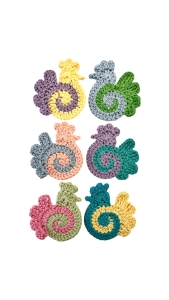 For this design, I’d give the color pairing a little thought before starting. You don’t need a complicated palette, but it helps to decide how much you want the spiral to stand out.
Lay your yarns beside each other in natural light. Look at them from a little distance, too. Two shades that seem different when you hold them close may blend together when viewed across a room.
If your goal is a clearly defined swirl, a lighter yarn paired with a deeper color is a useful starting point. If you prefer a softer look, choose shades that are closer together.
Here are a few combinations to consider:
| Color pairing |
A look you could aim for |
| Cream and mustard |
Warm, with a farmhouse feel |
| White and navy |
Crisp and strongly contrasted |
| Blush and burgundy |
Soft pink with a richer accent |
| Pale blue and teal |
Cool and colorful |
| Cream and brown |
Earthy and understated |
| Lavender and plum |
A gentle purple palette |
These are styling ideas, so feel free to use them as a starting point. A crochet chicken is a pretty forgiving place to try a color pairing you might hesitate to use in a larger project.
Does It Have to Look Like a Real Chicken?
Part of the fun is that it doesn’t.
You could choose natural shades if you enjoy a more traditional look, but the spiral invites a little imagination. A purple chicken or a bright blue one would suit the playful character of the design.
If you’re making several, you might choose one shared color and change the second shade for each chicken. That could give the group some consistency while letting each one have its own personality.
Another idea is to choose colors based on the person you’re making it for. A favorite color pairing can make a small handmade gift feel personal without requiring extra decoration.
For your first version, though, it may help to keep the palette simple. Once you’ve seen how your yarn choices look in the finished design, you’ll have a better sense of what you’d like to try next.
Picking Yarn for Your First Version
The designer allows flexibility in yarn choice, which opens up plenty of possibilities. Still, it’s useful to think about the fabric you want and how clearly you’d like to see your stitches.
As a general crochet consideration, smooth yarn in a light or medium shade can make stitches easier to inspect than very fuzzy or very dark yarn. That may be helpful while you’re getting familiar with an unfamiliar construction.
If you’re combining leftovers, compare their thickness and texture. Two yarns can have similar labels and still feel different in your hands. Working with yarns of comparable thickness is a sensible starting point when you want a consistent fabric.
Check the yarn labels for fiber content and care instructions as well, especially if you plan to give the finished piece away. It’s easier to provide useful care information when you know what you used.
Your yarn and hook choices may affect the finished size and appearance. For any construction-specific decisions, follow Atty’s tutorial rather than treating general yarn advice as a substitute for the pattern.
Read Through the Tutorial Before Starting
With a design that has an unusual visual effect, it’s worth taking a few minutes to look through the whole tutorial before picking up your hook.
That first read-through gives you a chance to see how the project develops, identify unfamiliar stitches, and check whether you have everything you need nearby.
The free version uses a photo tutorial, so pay attention to the images as well as the accompanying text. If you usually work from fully written patterns, that format may feel different from what you’re used to.
I wouldn’t label this pattern beginner-friendly or promise that it can be finished in a certain amount of time without working through it first. A better way to judge whether it suits you is to review the designer’s instructions and compare them with the techniques you already know.
If something looks unfamiliar, you can take time to practice that technique before committing to the finished piece.
Ways to Enjoy the Finished Chickens
These little chickens could be a cheerful addition to a craft shelf or a seasonal display. A small group in different colors could look especially charming arranged together.
For a spring display, you might choose pale shades and place them alongside other handmade decorations. For a more year-round look, warm neutrals or your favorite household colors could work well.
They could also make thoughtful decorative gifts for someone who enjoys chickens, farmyard themes, or small crochet pieces. Including a note with the designer’s name and the yarn’s care information is a nice finishing touch.
If you photograph your finished version, a simple background will help the spiral show. Try taking one picture of the whole chicken and another that brings the color detail closer. That gives other crocheters a useful view of both the shape and the yarn combination you chose.
Free Tutorial or Paid PDF?
Atty offers two ways to access the project.
The free photo tutorial is available on her blog. That’s the place to go if you want to look through the pattern online and follow the original instructions.
She also offers an ad-free PDF with fully written instructions and charts, available through the shop links in the original post. If you prefer a written pattern you can keep handy while crocheting, that version may better suit the way you work.
Both options come directly from the designer. Choose the format that feels most comfortable for you, and refer to her listing for the details of the paid version.
Where to Find the Swirly Spiral Chicken Pattern
You can find the free tutorial here:
Visit Atty’s for the Swirly Spiral Chicken Free Crochet Pattern
The same page includes links to Atty’s Etsy and Ravelry shops if you’d like to purchase the PDF.
When sharing this project with another crocheter, pass along the original link so they can access the designer’s instructions and photos in the right place.
A Small Project With Plenty of Color Possibilities
What draws me to this design is how much the color choice contributes to its character. The chicken shape gives it charm, while the spiral gives you something interesting to experiment with.
It’s the kind of project that makes you take another look at the yarn you already own. A leftover shade that felt awkward in one project could be exactly what gives this one its personality.
Start by choosing a pairing you’re curious about, then visit Atty’s tutorial to see how the design comes together. Whether you lean toward soft pastels, earthy colors, or a bright combination, there’s plenty of room to make your version feel like yours.
Design credit: Swirly Spiral Chicken by Atty van Norel / Atty’s. This article shares project inspiration and general yarn considerations. Please visit the designer’s website for the original pattern, construction instructions, and tutorial photos.


